Women in Aviation: 10 Pioneers Who Shaped History
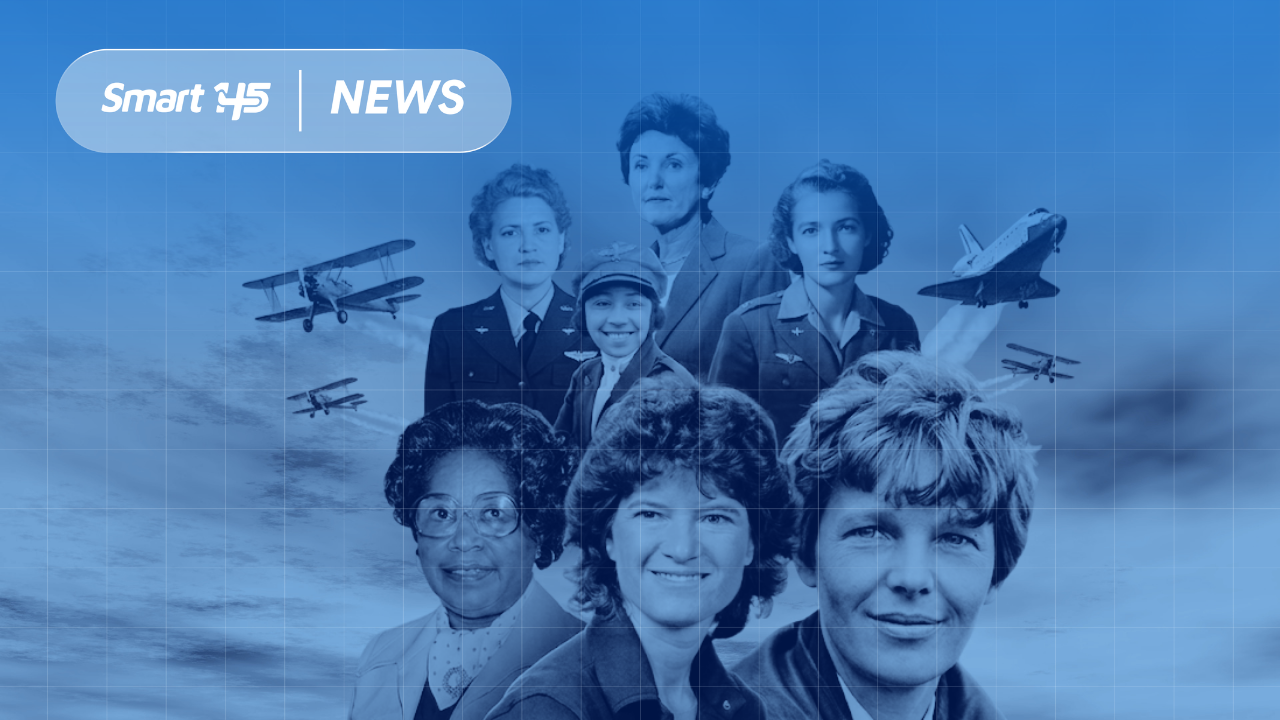
Women in aviation is a broad and growing field, one that spans piloting, aerospace engineering, maintenance, regulatory governance, and operational leadership. Yet for most of the industry's history, women had to build their own path into it. Throughout aviation history, women have played decisive roles in expanding what the industry could become, from early pioneers who proved women could fly to engineers, astronauts, and administrators who helped shape modern aviation operations.
Their contributions span more than a century of aviation development. Some proved that women belonged in the cockpit, even as few believed they did. Others helped shape spacecraft design, flight programs, and the regulatory frameworks that govern modern air transport. Many contributed to the technical foundations that support aviation engineering, flight operations, and aircraft maintenance today.
Today, according to IATA's gender diversity data, women represent approximately 42% of the global aviation workforce — yet hold just 6% of pilot positions and under a third of senior roles —. The distance between those numbers tells a story that begins more than a century ago.
The Breakthroughs That Changed the Sky
Women’s contributions to aviation did not emerge all at once. Over time, they appeared in different forms — first through pioneering flights, later through operational roles, and eventually through leadership in engineering, spaceflight, and aviation governance.
The Early Era
In the first decades of the twentieth century, aviation was still experimental. Aircraft design, navigation methods, and pilot training were all evolving, and few formal pathways existed for aspiring aviators. Women such as Harriet Quimby and Bessie Coleman demonstrated that flying skill and discipline — not gender — determined who could master flight. Their achievements helped shift public perception and opened the first visible space for women in aviation.
The Operational Era
By the 1930s and 1940s, aviation had become operationally critical, particularly during World War II. Aircraft production expanded rapidly, and trained pilots were urgently needed. Programs such as the Women Airforce Service Pilots (WASP) allowed women to ferry aircraft, conduct test flights, and support military aviation logistics. Leaders like Jacqueline Cochran and Nancy Harkness Love showed that women could perform reliably in demanding aviation environments.
The Modern Era
In the second half of the twentieth century, aviation expanded into aerospace engineering, space exploration, and complex global air transport systems. Women entered roles that influenced not only flight operations but also engineering research and aviation policy. Mary W. Jackson contributed to aerodynamics research, Sally Ride flew aboard the Space Shuttle, and Eileen Collins later commanded one. Others helped shape aviation governance and regulatory oversight.
How Many Women Work in Aviation Today?
Women currently make up approximately 42% of the global aviation workforce, according to IATA’s ‘25by2025’ initiative. However, representation drops significantly in technical roles: women hold around 6% of pilot positions globally and under 32% of senior leadership roles across the industry, per WAI industry statistics.
Progress is real but uneven. The gap is most pronounced in flight deck and maintenance operations — the very areas where the pioneers profiled in this article first had to fight for access. Understanding where we stand today starts with understanding how far the industry has come.
10 Women in Aviation History
Across aviation’s long history, some women didn’t just participate in its evolution—they accelerated it. Their achievements span early flight, wartime operations, engineering breakthroughs, and modern institutional leadership, creating a legacy of progress that continues to shape the industry today.
The following figures represent pioneers in flight, engineering, aerospace exploration, and aviation leadership. To showcase their contributions more broadly, the Smithsonian National Air and Space Museum maintains a dedicated collection.
1. Bessie Coleman
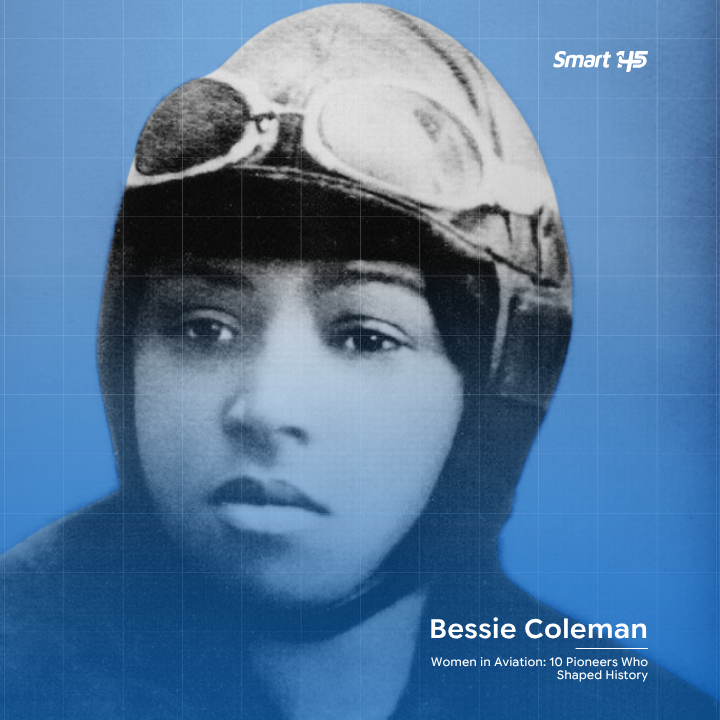
Bessie Coleman became the first African American and Native American woman to earn a pilot’s license in 1921. Because flight schools in the United States refused to admit her, she traveled to France to receive training at the Caudron Brothers’ School of Aviation.
After returning to the U.S., she performed in air shows and used her public visibility to advocate for equal access to aviation training for African Americans. Although her career was short — she died in an accident in 1926 — Coleman established a precedent that aviation should be accessible to those with the skill and determination to pursue it.
2. Harriet Quimby
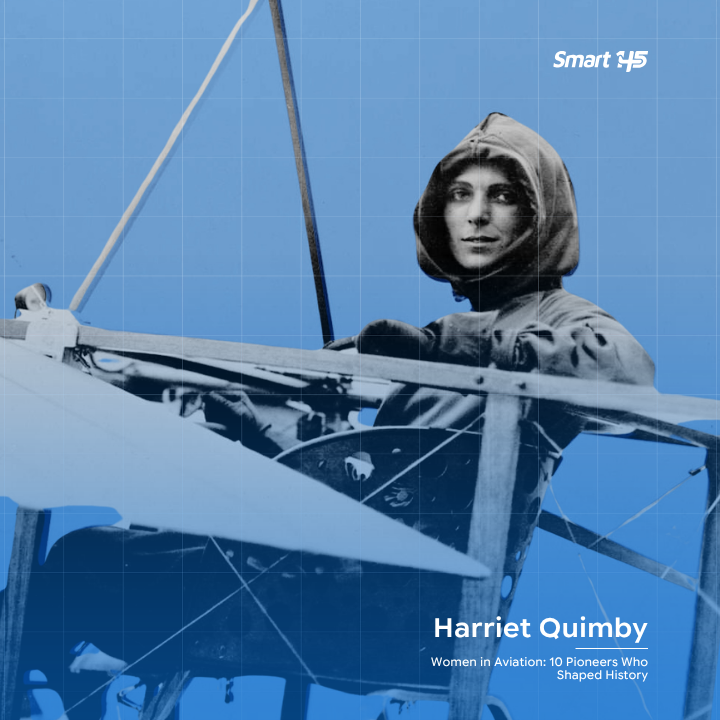
Harriet Quimby became the first licensed female pilot in the United States in 1911 — at a time when aviation itself was still proving its reliability. The following year, she became the first woman to fly across the English Channel, a mission that required strong navigational awareness and technical discipline in an era when aircraft systems remained experimental. Although her career ended that same year in a flying accident, Quimby’s achievements demonstrated that women could meet the same technical and operational demands expected of early aviators.
3. Amelia Earhart
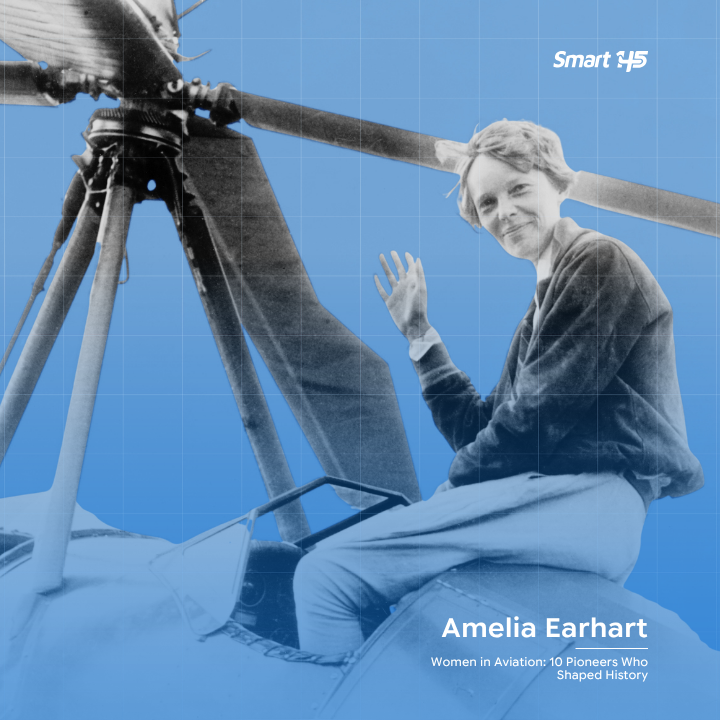
Few aviators shaped public perception of women in aviation more than Amelia Earhart. In 1932, she became the first woman to fly solo across the Atlantic Ocean. She also set multiple speed and distance records and co-founded The Ninety-Nines, an international organization of licensed women pilots that still operates today with over 5,000 members across 44 countries. Her disappearance in 1937 during an attempt to circumnavigate the globe remains one of aviation’s enduring mysteries, but her advocacy continues to resonate across the industry.
4. Jacqueline Cochran
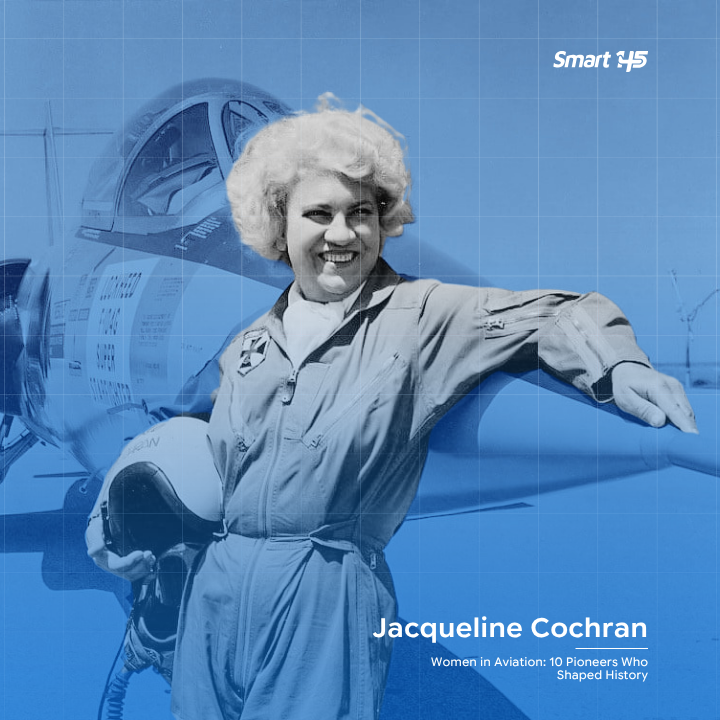
Jacqueline Cochran established numerous speed, altitude, and distance records throughout her career and became the first woman to break the sound barrier in 1953.
During World War II, she played a central role in organizing and directing the Women Airforce Service Pilots (WASP), a program that allowed women pilots to ferry aircraft, conduct test flights, and support military aviation logistics across more than 100 bases. Her leadership helped demonstrate that women could contribute effectively to military aviation operations under demanding conditions.
5. Nancy Harkness Love
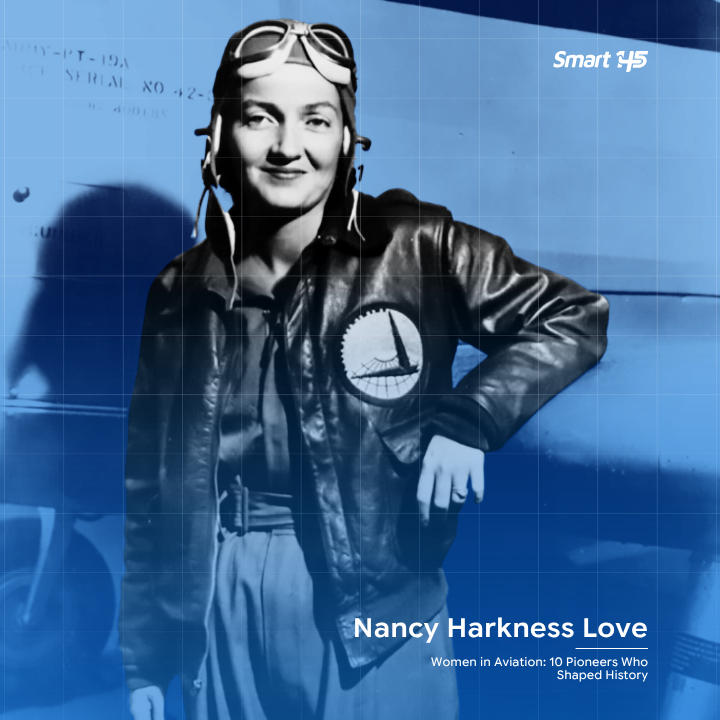
As World War II expanded the demand for trained pilots, Nancy Harkness Love helped address critical aviation logistics needs by establishing the Women’s Auxiliary Ferrying Squadron (WAFS) in 1942.
The program recruited experienced women pilots to ferry military aircraft between factories, maintenance facilities, and operational bases, missions that required strict adherence to flight procedures and operational discipline. The WAFS later became part of the broader WASP program, further expanding the operational roles available to women pilots.
6. Willa Brown
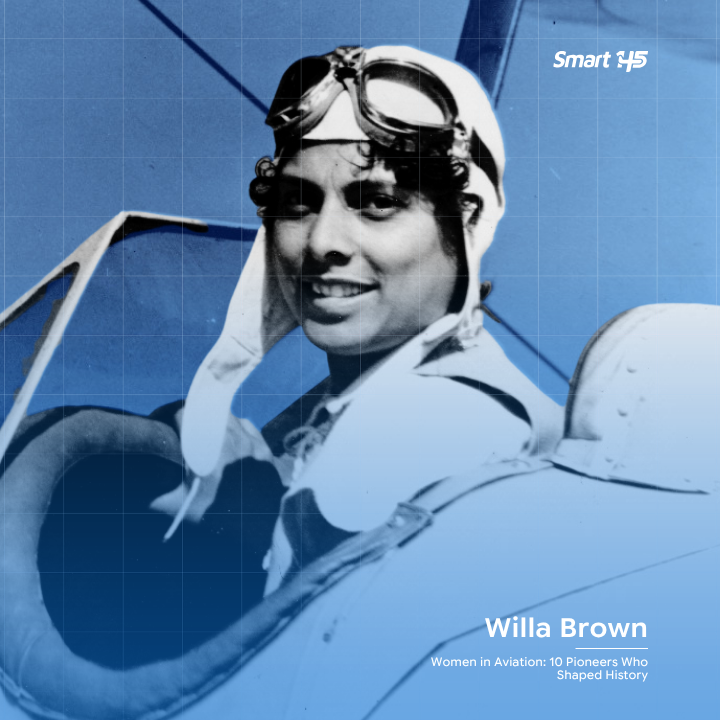
Willa Brown became one of the first African American women in the United States to earn both a pilot’s license and a commercial pilot certificate.
She helped establish structured training opportunities through the Coffey School of Aeronautics in Chicago, and her work contributed directly to the development of the Tuskegee Airmen training pipeline, supporting a new generation of military aviators who would go on to serve with distinction in World War II.
7. Mary W. Jackson
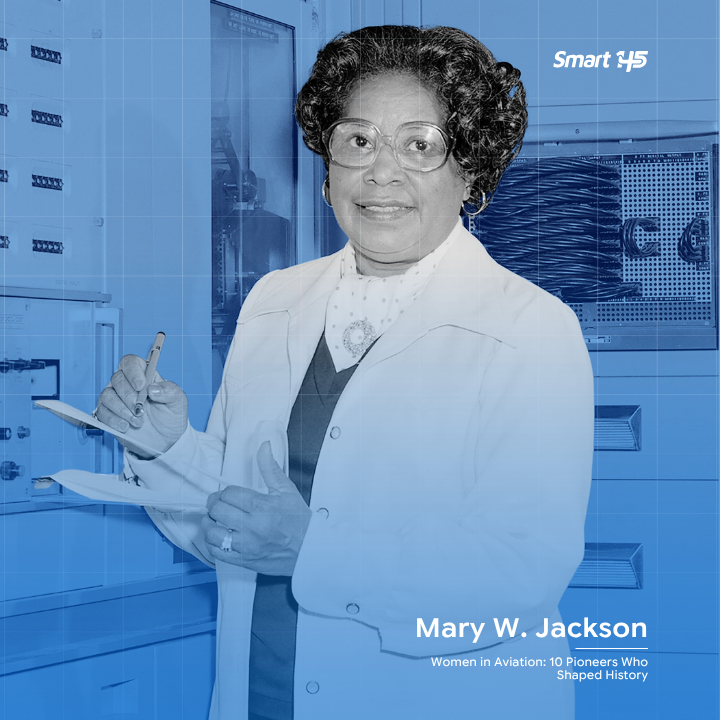
Mary W. Jackson became NASA’s first African American female engineer. Her work focused on aerodynamics and wind-tunnel experiments, contributing to the understanding of airflow behavior and flight performance in high-speed environments.
She co-authored more than a dozen research reports throughout her engineering career at Langley. Later in her career, she shifted focus to support career advancement and diversity initiatives within NASA, work that earned her a posthumous Congressional Gold Medal in 2019.
8. Sally Ride
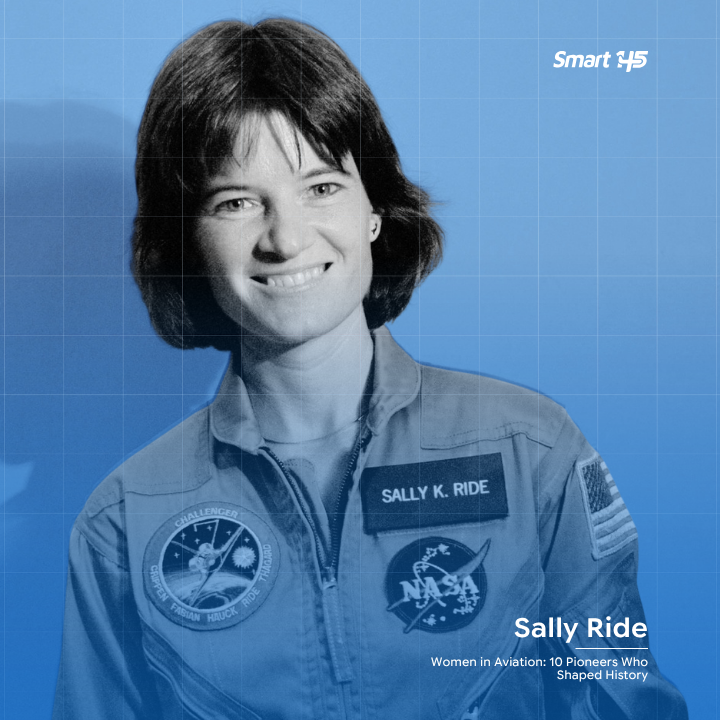
Sally Ride became the first American woman in space in 1983 when she flew aboard the Space Shuttle Challenger as a mission specialist. She operated the shuttle’s robotic arm and supported the deployment of scientific satellites — illustrating how astronauts increasingly managed complex operational systems during spaceflight rather than simply piloting spacecraft.
After retiring from NASA, she founded Sally Ride Science to encourage girls and young women to pursue careers in science, mathematics, and technology.
9. Eileen Collins
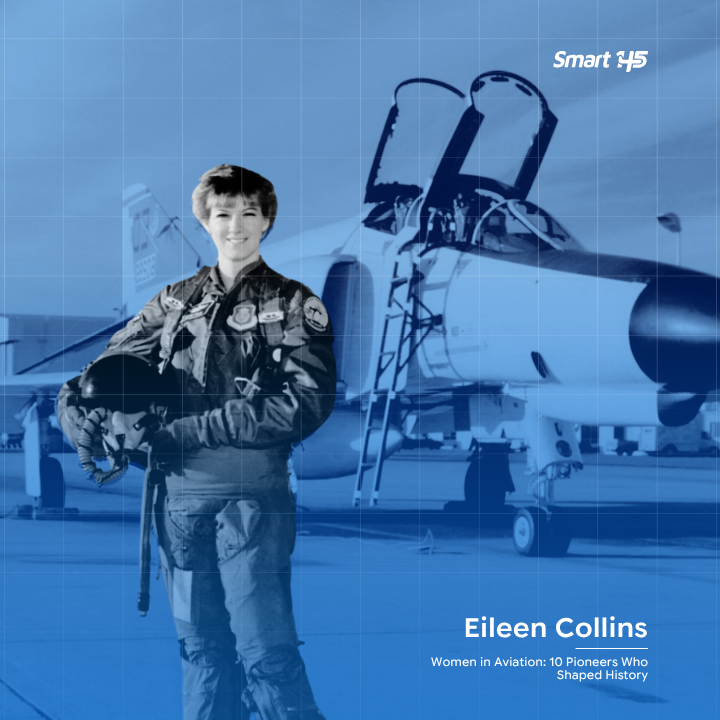
Eileen Collins became the first woman to pilot a Space Shuttle in 1995, and four years later, the first woman to command a Space Shuttle mission. Overseeing both crew operations and mission execution, her achievements demonstrated that women could lead some of the most technically demanding flight programs ever developed. She logged over 872 hours in space across four missions before retiring from NASA in 2006.
10. Carol B. Hallett
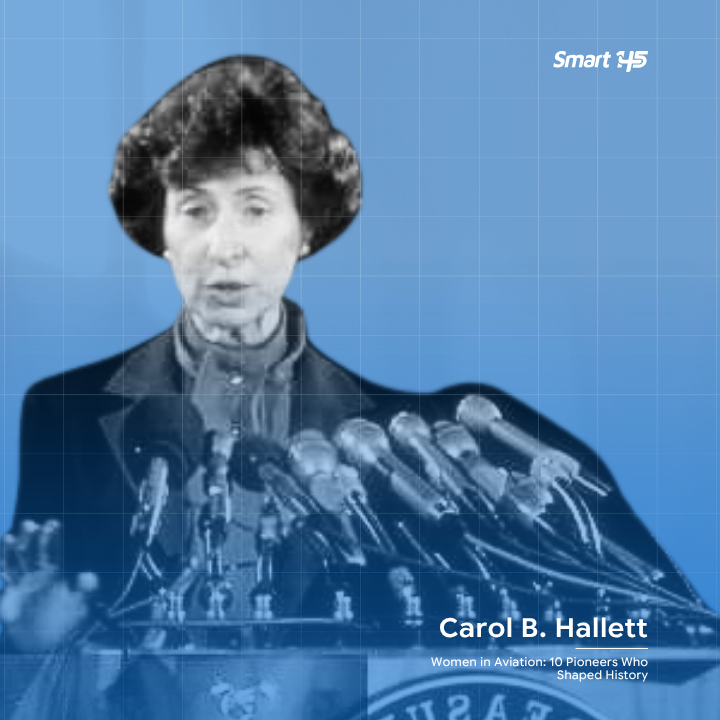
Carol B. Hallett became the first woman to serve as FAA Administrator, leading the agency from 1981 to 1985. Her tenure aligned with a pivotal moment for U.S. aviation — a period that required firm direction over regulatory policy, airspace management, and national aviation operations in the aftermath of significant industry disruption.
Before her FAA role, she served as a California State Assemblywoman, bringing legislative and policy experience into aviation governance. Her appointment established that the institutional leadership of aviation safety and regulation was not the exclusive domain of any one background, a precedent that continues to shape how the industry selects and evaluates its senior leaders.
What Their Stories Have in Common
These women, and many others, worked across different decades and disciplines, but clear patterns emerge throughout their careers.
- They Didn’t Fit In — They Built the Next Normal
In most cases, these pioneers entered aviation before institutional pathways for women existed. Rather than waiting for acceptance, they proved their capabilities through consistent performance. Over time, those accomplishments helped reshape industry expectations, creating opportunities that later generations could follow.
- They Carried Pressure Without Losing Standards
From its earliest days, aviation has required strict discipline, precision, and accountability. Many of these pioneers worked under intense scrutiny while maintaining the professional standards expected in flight operations and engineering work. Their careers reinforced a principle the industry still applies: aviation excellence depends on reliability, competence, and technical rigor.
- They Turned Courage into Repeatable Outcomes
The significance of their work extended far beyond individual milestones. Contributions in training programs, leadership roles, engineering research, and policy frameworks created structures that future professionals could build upon. What began as individual breakthroughs gradually became lasting progress for the industry.
Women Who Power the Heart of Smart 145
Aviation continues to advance thanks to the people who sustain its most essential functions. Across the industry, women now hold key roles in maintenance, logistics, compliance, and the systems that support daily flight operations. The WAI 2026 Conference and initiatives from organizations like Women in Aviation International reflect how the industry is actively working to close the remaining representation gaps, particularly in technical and maintenance roles.
Every day in the environment Smart 145 operates in, women play a visible role across the work that sustains aviation. Engineers, technicians, inspectors, and MRO operators contribute directly to keeping aircraft serviceable and safe, taking on responsibilities that require precision and deep knowledge of maintenance processes.
That same presence extends into the team behind Smart 145 itself. Women in development, product, operations, and customer support help refine the system that aviation repair stations and parts suppliers rely on: strengthening the platform’s ability to simplify MRO’s complex workflows and give teams clearer control over their day-to-day operations.
To learn more about the people and mission behind Smart 145, visit the team. For more on the industry context in which they operate, see our guide to what MRO means in the aviation industry.